“Del crimen real a la ficción” con André Didyme-Dôme y Gustavo Forero(Radio UNAL)
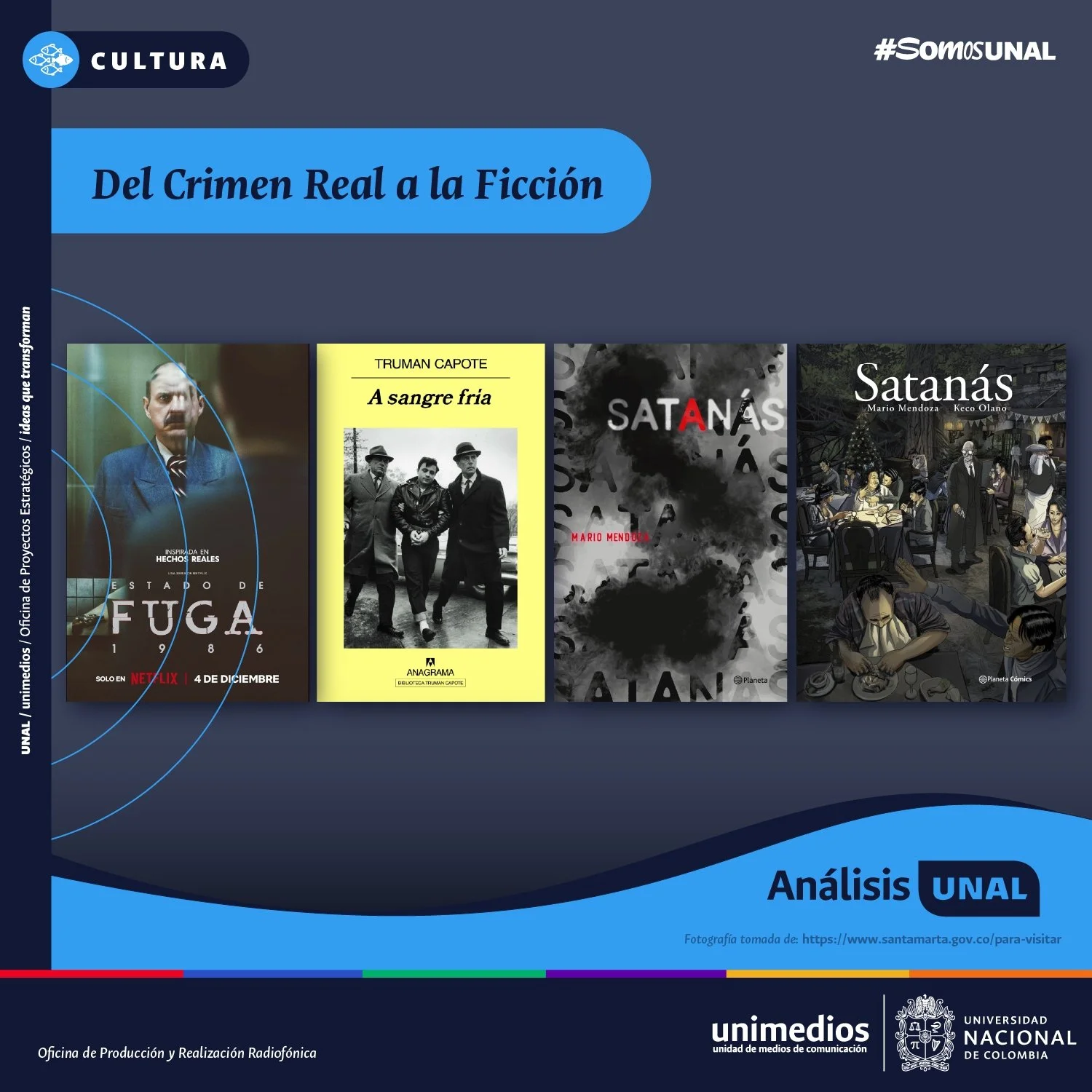
El "true crime" o crimen real es un género literario y mediático de no ficción que investiga y narra crímenes verdaderos, a menudo enfocándose en asesinatos y asesinos en serie. Transforma hechos reales, investigaciones judiciales y perfiles de víctimas/perpetradores en narrativas detalladas que buscan informar, explorar la psicología humana y satisfacer la curiosidad social.
Lo que sí tenemos claro es que no hay dos casos iguales. Sin embargo, pueden compartir características que los definen como casos de éxito. Hay tres ingredientes clave para que un true crime se convierta en todo un fenómeno:
Que esté basado en hechos reales: las historias están fundamentadas en crímenes que realmente ocurrieron, utilizando datos verificables y testimonios.
Que contenga algún tipo de misterio: presenta una narrativa detallada y a menudo dramática que puede incluir reconstrucciones de los eventos, perfiles psicológicos de los criminales, y contextos sociales concretos. Muchos de los casos además, pueden no haberse llegado a resolver.
Que haga un análisis de la justicia: a menudo examinan cómo se manejan los casos dentro del sistema judicial y pueden criticar la eficacia de las investigaciones y los juicios.
Puedes escuchar esta emisión aquí:
https://radio.unal.edu.co/detalle/del-crimen-real-a-la-ficcion